
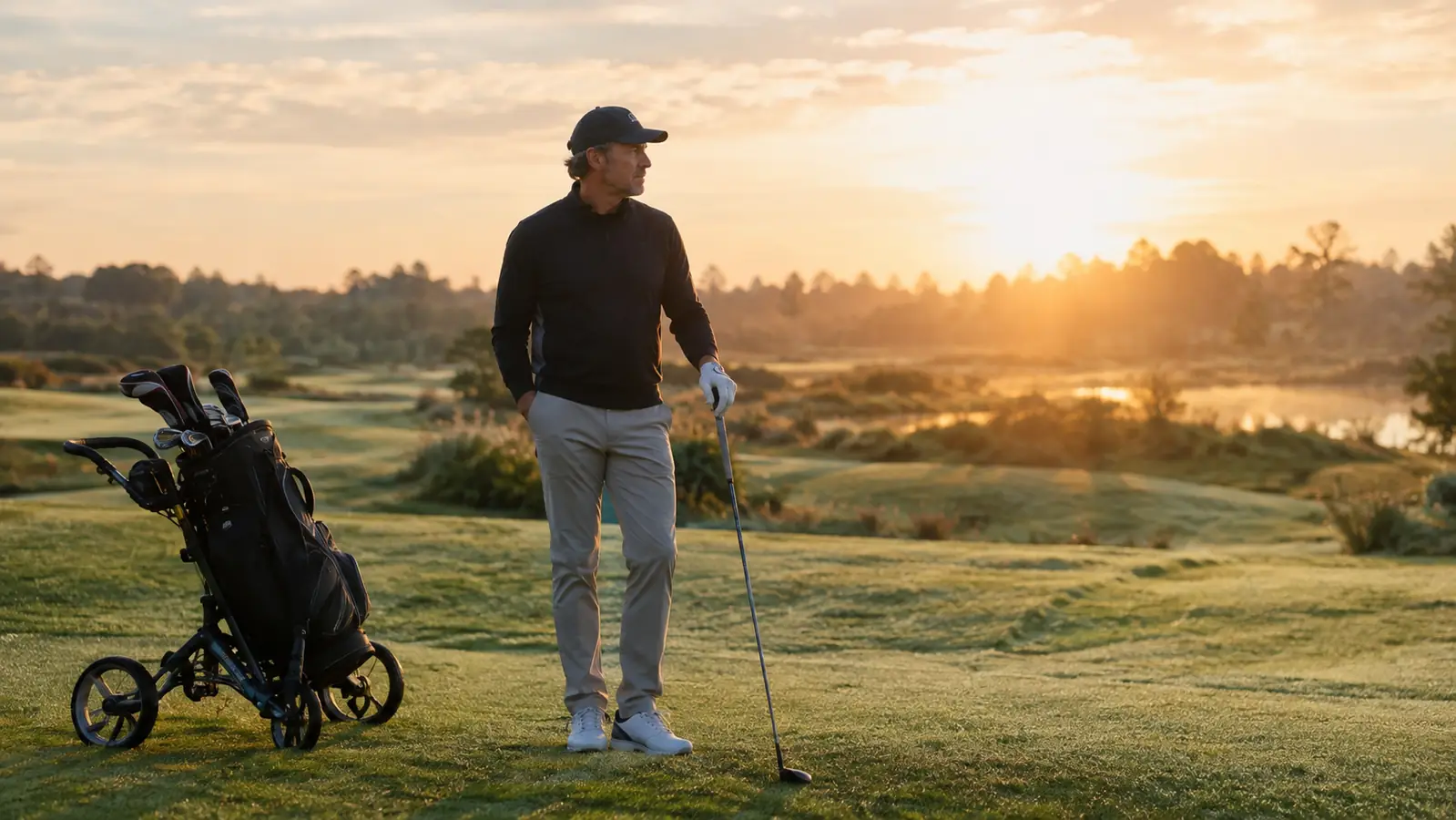
If you play golf in New Jersey, you learn to read the sky. I'm Gene, I'm 58, I play to about a 14 handicap, and I walk nine holes twice a week at my local public course plus an 18-hole Saturday round with the same three buddies. That means I play in drizzle, in wind, in the kind of humid August mornings where the towel on my push cart is soaked by the third hole. My home course is a municipal layout in Monmouth County, nothing fancy, the kind of place where the starter knows your name and the greens have more grain than grass. For years I treated gloves as disposable, and the FootJoy name on a package meant nothing to me. I bought whatever was on the rack, used it until the palm split, and never thought about it twice. Then one Saturday in late September changed my mind. We had a steady mist all morning, the kind that is too light for rain gear but heavy enough to wet every grip on the course. By the fourth hole I had re-gripped my driver on every single tee shot, and one of my buddies, who is not exactly a gear guy, asked why I did not own a glove that worked in the damp. I did not have an answer. So I spent a season with the FootJoy Men's WeatherSof 2-Pack Golf Glove on one hand and the Callaway Weather Spann on the other, and I found out they are not the same thing at all.
The short answer: the FootJoy WeatherSof is the glove I reach for when I want a secure grip in damp conditions and a glove that will still be alive after a dozen rounds. The Callaway Weather Spann is lighter, thinner, and more comfortable on a dry day, but it wore out faster for me and gave me less confidence when the club got slick. If you play in wet weather or you hate replacing gloves every month, the FootJoy is worth it. If you mostly play dry rounds and you want maximum feel, the Callaway has a real argument. I tested both from the first week of April through the end of October, which in New Jersey means frost, fog, and everything in between. I kept them in separate pockets of my bag so I would reach for the right one without thinking, and I switched back and forth depending on the conditions. Here's the full breakdown.
| FootJoy WeatherSof 2-Pack | Callaway Weather Spann | |
|---|---|---|
| Grip in wet conditions | Cabretta leather with WeatherSof treatment holds the club when the grip is damp | Synthetic and mesh surface gets slick once the rain starts |
| Feel and feedback | Slightly padded, good feedback but a touch less direct | Thin and close-fitting, you feel the grip texture clearly |
| Durability | Lasted me 15-plus rounds before the leather showed real wear | Started pilling at the palm around round eight |
| Fit and sizing | Consistent sizing, snug through the knuckles, breaks in nicely | Runs a half size small, took two rounds to stretch out |
| Price per glove | Two-pack, so you get a spare and the per-glove cost is solid | Single glove, often discounted, cheaper per glove when on sale |
| Best for | Damp mornings, humid summers, and golfers who hate buying gloves | Dry fairways and golfers who want maximum feel |
Where FootJoy Wins
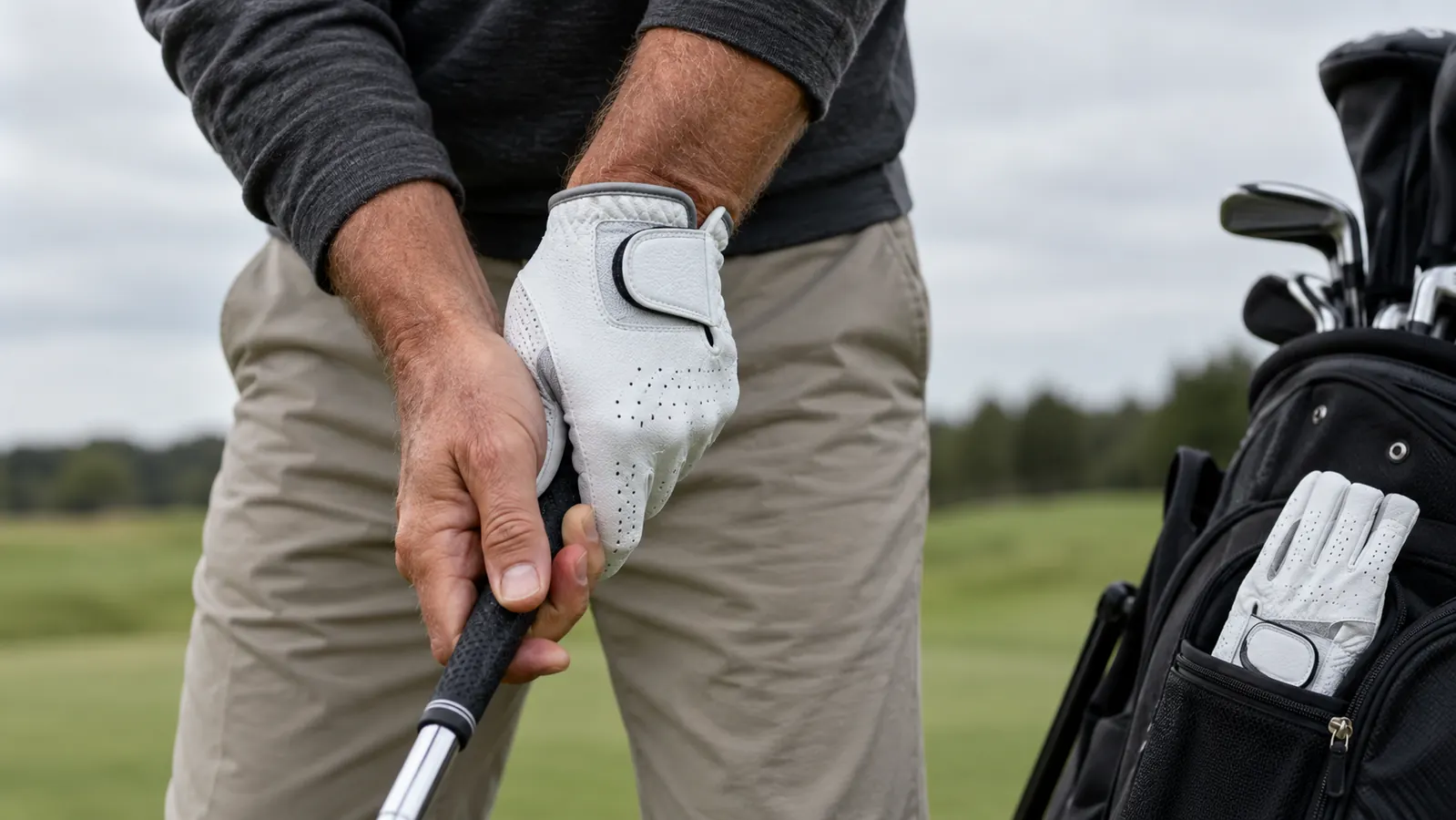
The first thing I noticed about the FootJoy WeatherSof was how it behaved on a wet grip. I play early on Saturdays, and by the third hole the dew is still heavy on the grass. With my old glove, I would find myself re-gripping the club on every tee shot. With the WeatherSof, the club stayed put. The cabretta leather has a tacky quality that seems to get better, not worse, when there is a little moisture in the air. I do not have a scientific explanation for it. I just know I stopped thinking about my left hand and started thinking about my swing. The moment it clicked was a Saturday in mid-October, the kind of morning where the first group tees off in fog. We had a 20-yard par 3 on the back nine, number 12, and the grass was still wet enough that my ball picked up a film of water before I even hit it. I took out my 7-iron, and instead of wiping the grip on my pants and hoping, I just hit the shot. The club did not twist. The ball landed pin high. The old glove would have twisted on that same shot. I know because it had twisted on the same hole the week before, and I had walked off the green muttering about my swing when the real problem was in my hand. That was the round I stopped carrying a spare glove in my back pocket.
Durability is the other place FootJoy ran away with it. I keep a scorecard in my bag and I jot down when a glove goes in and when it comes out. The WeatherSof lasted me 15 rounds before the leather at the palm started to show real wear. The Callaway started pilling around round eight. For a two-pack, that difference matters. I gave the FootJoy no more attention than I did to any other glove. I stuffed it in my bag, let it dry on the dashboard, and it kept going. I marked the dates right on the scorecards so I would not trust my memory. The FootJoy went in on the first Saturday in April, and the first real wear showed up on a round in late July, which works out to fifteen rounds with the Saturday group plus the nine-hole walks. The Callaway went in the same week, and by the second week of June, about eight rounds in, the palm had a rough patch the size of a quarter. The rough patch felt like sandpaper against my palm, and no amount of washing brought the surface back. I even tried a glove treatment one of my buddies recommended, and it helped for exactly one round before the pilling came right back. The stitching held, but the surface had lost its grip. I ended up retiring it before Labor Day and using the FootJoy for the rest of the season. That is the kind of boring reliability I appreciate at my age.
Where Callaway Wins
I will give the Callaway Weather Spann its due. On a dry day, it is the more comfortable glove. The material is thinner and the fit is closer, so you feel the grip texture through the glove in a way the FootJoy does not quite match. For a mid-handicap player who is working on feel around the greens, that direct feedback is a real advantage. I have a small putting setup in the garage, a mat and a cup, and I spend maybe twenty minutes a night on it during the week. With the Weather Spann on, I could feel the flat putter grip in a way I did not with the FootJoy, which has a little more padding between my hand and the shaft. On chip shots from the fringe, the thinner glove let me feel the bounce of the club head. That is a real thing for a mid-handicap player who needs all the feedback he can get. I would not call the FootJoy clumsy by any means. The difference is subtle, like the difference between a good leather work glove and a thin mechanic's glove, and which one you prefer depends on what you are doing. If I played in Arizona instead of New Jersey, I might have a different favorite.
The Callaway also wins on price per glove if you catch it on sale, and it breathes better in the heat. On a 90-degree afternoon, the Weather Spann kept my hand cooler than the FootJoy. That is not nothing. I remember one afternoon in July, the Saturday round, when the temperature hit the low nineties and the humidity made it feel like ten degrees more. By the turn, the Callaway felt noticeably cooler than the FootJoy had on similar days, and my hand did not come out of the glove with that damp, pruny feeling. But that same afternoon, on the 14th hole, a light shower blew through for about ten minutes. I hit one shot with the Callaway in that mist and the club turned in my hand on the follow-through. I switched to the FootJoy out of my bag for the last four holes and did not have the problem again. The Callaway also picked up more dirt and grass stains than the FootJoy, and the palm stitching looked tired by mid-August. That afternoon reminded me why I stopped using synthetic gloves years ago, and why the WeatherSof's leather surface is worth the extra care. The tradeoff is clear: the Callaway is a fair-weather glove. The moment the humidity spiked or a light rain started, I lost confidence in it. The synthetic surface got slick, and I found myself gripping harder, which is exactly the wrong thing to do. For me, a glove that only works in perfect conditions is a glove I will not reach for often enough.
The FootJoy WeatherSof lasted me 15 rounds before the leather showed real wear. The Callaway started pilling around round eight.
Stop Replacing Your Glove Every Month
The FootJoy WeatherSof 2-Pack held up for 15-plus rounds in my bag, through dew, drizzle, and a New Jersey summer. If you want a glove that grips when it matters and lasts, this is the one.
Amazon Check Today's Price on Amazon →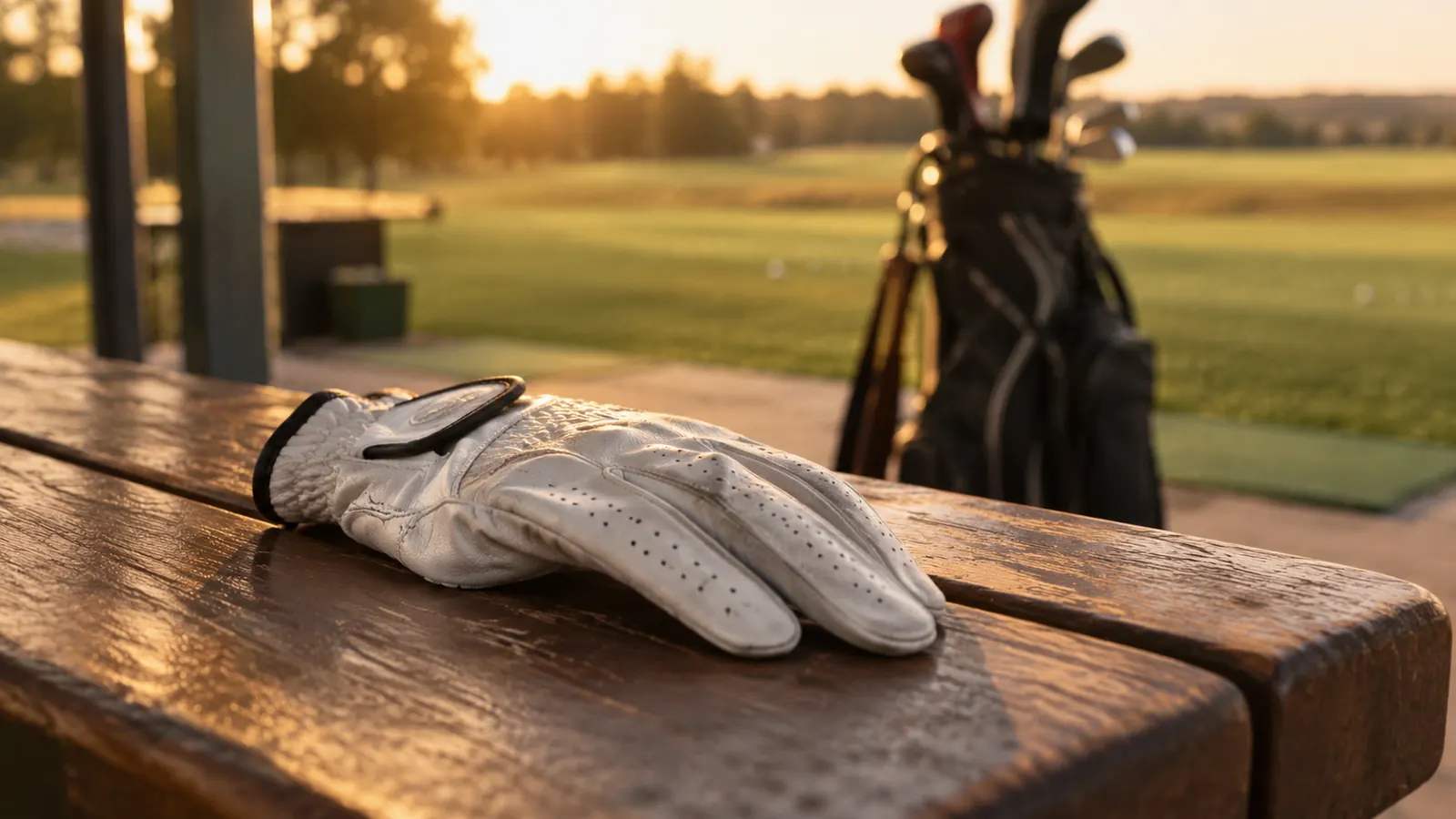
Who Should Buy Which
Buy the FootJoy WeatherSof 2-Pack if you play early mornings, you live somewhere with humidity, you walk and carry your bag, or you are simply tired of buying gloves every few weeks. It is the glove for golfers who want their equipment to be the least interesting part of the round. It grips, it lasts, and the two-pack means you always have a spare when one finally gives out. I walk nine holes twice a week and I carry my bag on a push cart, which means my glove sees more time in the elements than it would if I rode in a cart. The WeatherSof handled that without complaint. I have a drawer full of half-used gloves at home, the graveyard of good intentions, and the WeatherSof is the first one in years that I actually finished. If you play a cart-heavy course in a dry climate, the durability advantage matters less and the feel of the Callaway becomes more attractive. But for my game, my schedule, and my home course, the FootJoy is the right answer.
Buy the Callaway Weather Spann if you play mostly dry rounds, you prioritize feel over durability, and you do not mind replacing gloves more often. It is a good glove. It is just not the glove I would trust on a damp Saturday morning. If you are the kind of player who keeps a glove for a full season, the FootJoy is the better investment. If you like the idea of a thinner, more connected feel and you play in a dry climate, the Callaway is worth a look. I would also say this: if you are the sort of player who swaps gloves at the turn because the first one is sweaty, the Callaway's breathability is a genuine plus. And if you mostly play in the afternoon on dry fairways, the feel advantage is real. One of my buddies, the same one who asked about the damp glove, bought a WeatherSof after my recommendation and has not complained once since. But if you are a morning golfer, a walker, or someone who plays through a little weather, you will end up like me, with the FootJoy in the bag and the Callaway in the drawer.
Get the Glove That Lasts
After a full season of testing both, the FootJoy WeatherSof 2-Pack is still in my bag. Check today's price on Amazon and see if it works for your game.
Amazon Check Today's Price on Amazon →