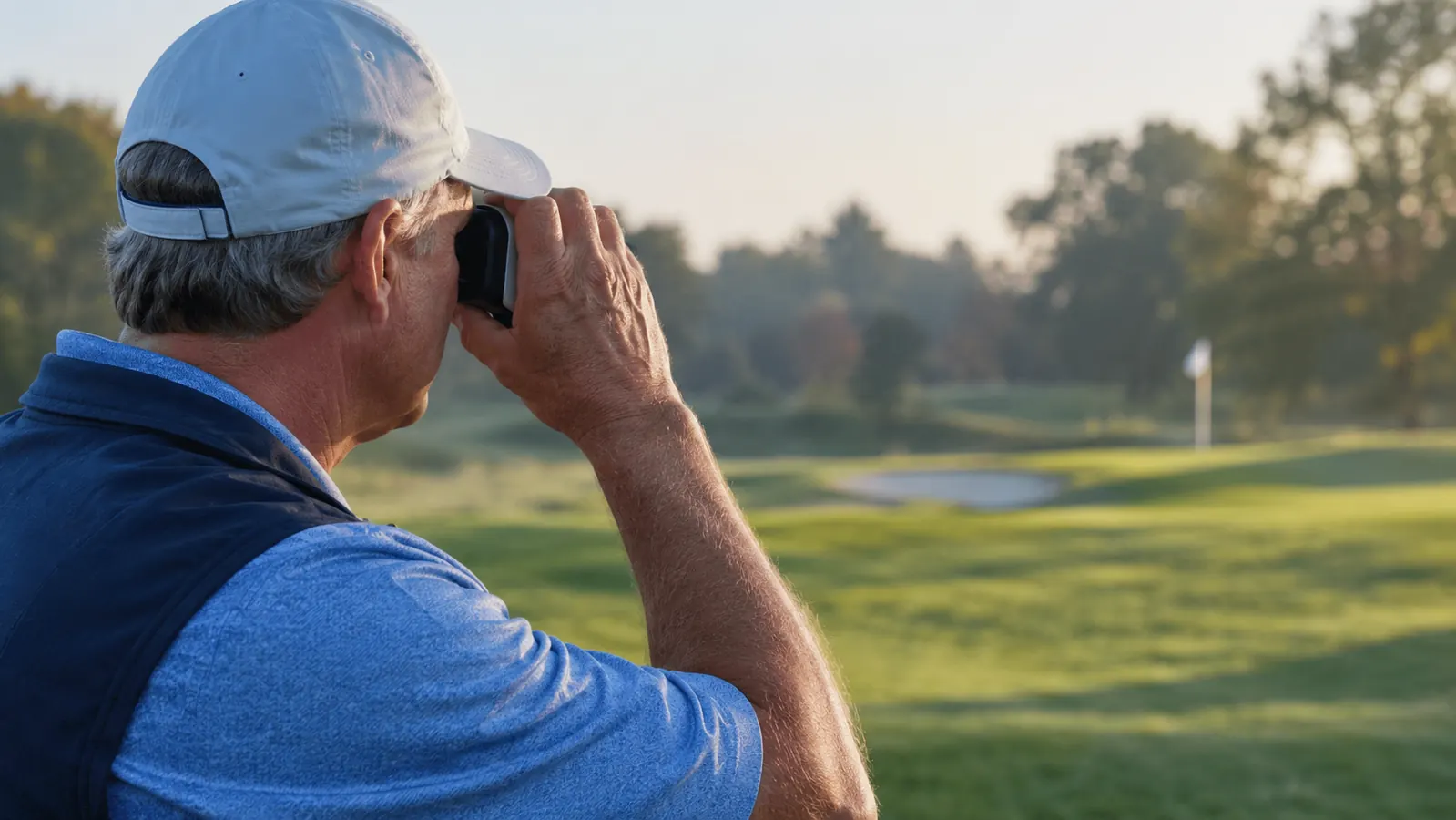
I am a 58-year-old golfer who plays to about a 14 handicap. I walk nine holes twice a week at my local public course in Monmouth County, New Jersey, and I play an 18-hole round with the same three buddies most Saturdays. Somewhere around the third hole last spring, one of my buddies handed me his Callaway 300 Pro rangefinder and said, 'Try this on the par 3.' I did, and I have been comparing laser versus GPS gear ever since. This is the comparison between the Callaway 300 Pro Golf Laser Rangefinder and the Bushnell Phantom 3 GPS speaker.
The short answer: if you want the exact distance to a flag you can see, the Callaway 300 Pro is the better tool. If you want front, middle, and back yardages without lifting anything to your eye, the Bushnell Phantom 3 does that job well. Most golfers I know end up happier with the laser. I did. Here is why.
How I Tested Both
I used the Callaway 300 Pro for about four months as my everyday rangefinder. I used the Bushnell Phantom 3 for another six weeks, clipping it to my push cart the way its designers intended. I also carried both in the same round for a few Saturdays, which is the fairest way to compare them. I tested them on my home course, where I know every yardage by heart, and on one unfamiliar course during a trip with my foursome.
My home course is a public layout with small greens and a lot of bunkers. That is the kind of course where the difference between the front of the green and the flag matters. A GPS device tells me the green is 162 yards to the middle. A laser tells me the flag is 171. On a course like mine, that nine yards is the difference between a 6-iron and a 5-iron, and it changes the way I play the hole.
I should also say what I did not test. I did not test either device in heavy rain. I did not test the Bushnell app in depth, because I prefer not to have my phone on the course. I did test both in bright sun, in fog, and in late afternoon light, and those are the conditions where the two devices really separate.
One thing I want to be clear about: I did not test these devices on a simulator, and I did not measure them with surveying equipment. I am a 14 handicap who plays a public course. My test was simple. I used both devices on real rounds, in real conditions, and I paid attention to which one made me more confident over the ball. That is the test that matters for a weekend golfer.
The Core Difference
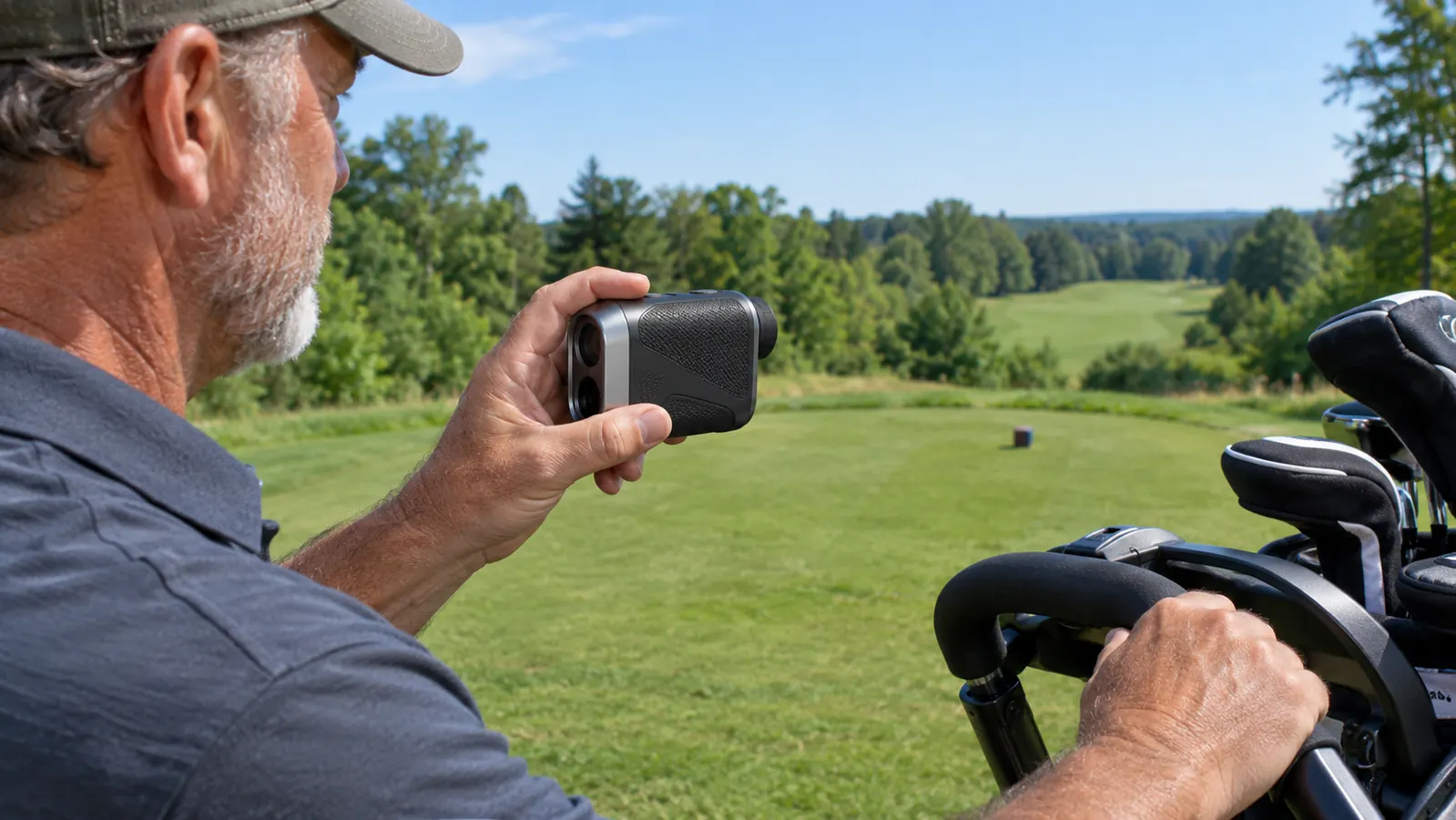
The Callaway 300 Pro is a laser rangefinder. You bring it to your eye, aim at the flag, press a button, and it gives you the exact distance to that specific target. It works because it bounces a beam off the object you are looking at. If you can see the flag, you can get its number, even if the flag is tucked behind a bunker or set against a treeline.
The Bushnell Phantom 3 is a GPS device. It uses satellites to know where you are on the course, and it shows the distances to the front, middle, and back of every green. It also gives hazard yardages and can show the shape of the hole. It never needs to see the flag. It just needs to know which course you are on.
The Numbers That Mattered
The most useful number I got all season came on the 7th hole at my home course, a par 3 that plays slightly uphill. The Bushnell Phantom 3 said the green was 148 yards to the middle. The Callaway 300 Pro said the flag was 156 yards. I hit a 6-iron and landed pin high. Without the laser, I would have hit a 7-iron and come up short. That one shot did more to convince me than any spec sheet.
The most useful number from the GPS came on the 14th hole, a par 5 where the fairway bends left and a creek cuts across at about 220 yards. The Phantom 3 showed me the hazard distance before I ever reached my ball, and I laid up short of it instead of trying to carry it. A laser would have given me the exact distance to whatever I aimed at, but it would not have warned me about the creek. Both tools earned their place that day.
| Callaway 300 Pro | Bushnell Phantom 3 | |
|---|---|---|
| How it measures | Laser: points at a specific flag or target and returns an exact yardage | GPS: uses satellites to show front, middle, and back of the green |
| What you get | Precise distance to the flag, even in fog or against a treeline | Distances to front, center, and back of every green, plus hazard yardages |
| Ease of use | One button, instant reading, but you have to bring it to your eye and hold steady | Glance down at the device or your phone, no aiming required |
| Slope feature | External switch to turn slope readings on or off for competition | No slope function; GPS distances are always playable distances |
| Battery life | Runs on a CR2 battery that lasts many rounds, but you need a spare on hand | Rechargeable internal battery, charges with a standard cable |
| Speed of play | Fast when you are ready to shoot, but aiming takes a few extra seconds per shot | Distance is already on screen when you reach your ball, no delay |
| Best for | Golfers who trust their eye and want one exact number to a visible target | Golfers who want a quick lay of the land on unfamiliar courses |
Where the Callaway 300 Pro Wins
The Callaway 300 Pro wins the one thing I care about most: giving me a number I can trust to the flag I am actually aiming at. On a par 3 with a front pin tucked behind a bunker, the GPS tells me the green is 162 yards to the middle. The laser tells me the flag is 171 yards, which changes my club entirely. That kind of precision shows up on nearly every hole, not just par 3s.
The external slope switch on the Callaway 300 Pro matters more than I expected. My Saturday group plays a casual game, but we also enter the occasional club event where slope has to be off. With the Callaway, I flip a switch on the outside of the unit and I know the device is legal. No menus, no settings buried in an app. For a guy who grew up before smartphones, that simplicity is worth a lot.
The magnification is also a real help for my eyes. I am 58, and picking a flag out of a cluttered background is not as easy as it used to be. The Callaway 300 Pro magnifies the target, so I can see the flag clearly and hold the reading steady. That is exactly the situation where GPS devices are no help at all, because they do not show you the flag in the first place.
Where the Bushnell Phantom 3 Wins
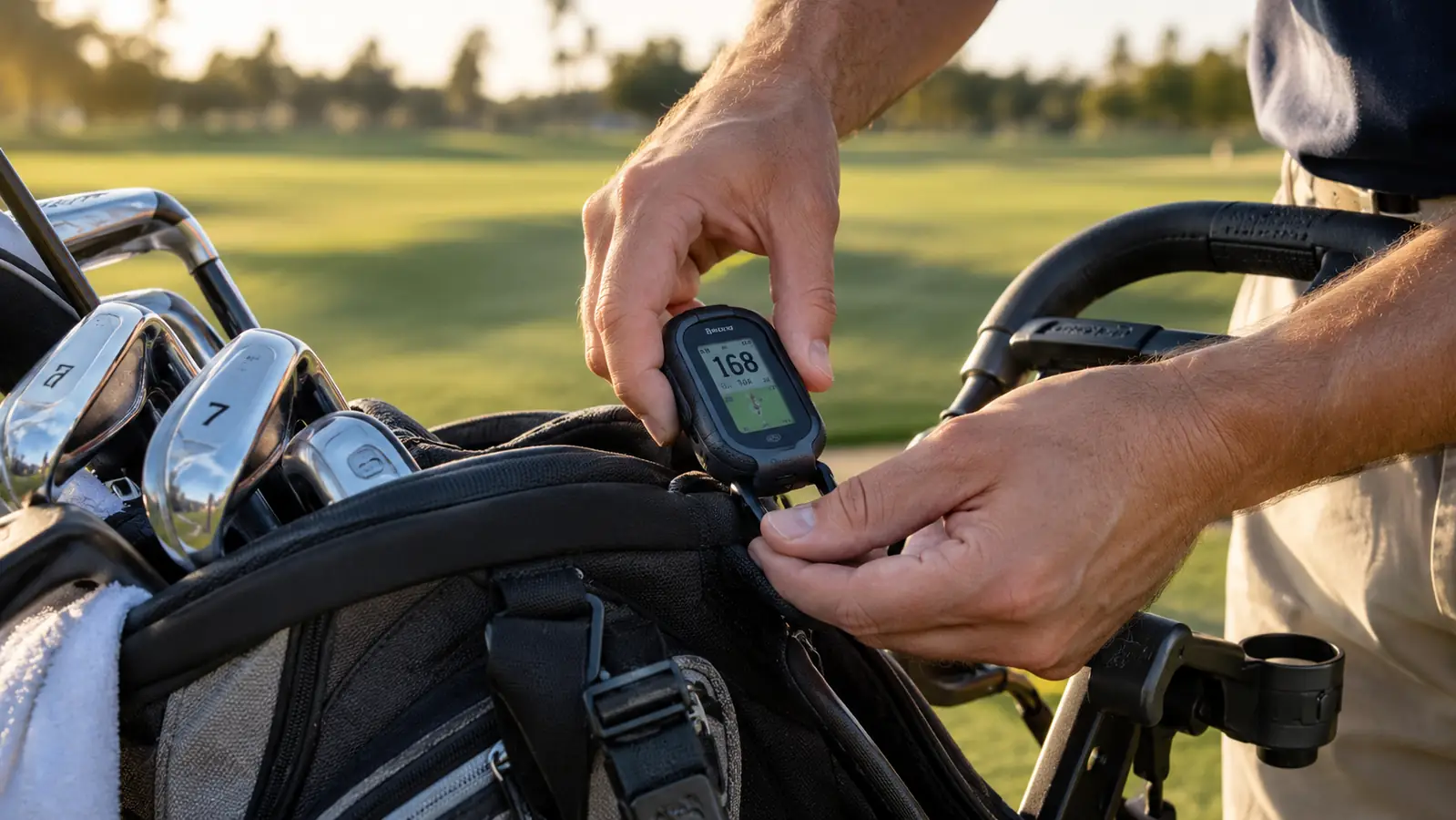
The Bushnell Phantom 3 wins on convenience, and I would be lying if I said it was a small thing. It sits on my push cart and shows front, middle, and back distances before I even reach my ball. I never have to stop, aim, or hold still. On a busy Saturday round, that saves a little time on every single hole. It also gives me hazard distances and lets me see the shape of a hole I have never played.
The battery situation is also better on the Bushnell. The Callaway 300 Pro uses a CR2 battery, and while it lasts a long time, it dies without much warning. I now keep a spare in my bag. The Phantom 3 charges with a cable I already own, and a full charge lasted me more than three rounds of walking. For a lot of golfers, that convenience alone will tip the decision.
The Phantom 3 is also the better choice when you are playing a course you do not know. On my annual trip with my foursome, I used it to see the shape of holes I had never played, and the hazard distances saved me from at least a couple of stupid shots. On an unfamiliar course, that kind of information is worth more than the exact flag distance, because I do not know where the trouble is yet.
Get the exact number to the flag you are aiming at
The Callaway 300 Pro laser rangefinder gives me a precise reading to a visible target, with an external slope switch for competition. It is the device I reach for on every par 3 and every blind approach.
Amazon Check Today's Price on Amazon →What Nobody Tells You About the Comparison
The first thing nobody tells you is that both devices are accurate. The Bushnell Phantom 3 never gave me a wrong yardage. The Callaway 300 Pro never gave me a wrong yardage either. The difference is not accuracy. The difference is what question each device answers. The GPS answers the question 'how far is this green?' The laser answers 'how far is that flag?' Those are different questions, and on my course the second one is more useful.
The second thing nobody tells you is that the laser takes more time. Not a lot of time, but enough that it changes your routine. With the Phantom 3, I would walk up to my ball, glance at the screen, and pull a club. With the Callaway 300 Pro, I have to stop, take the device out of its holster, bring it to my eye, aim, and hold steady. That is maybe ten seconds per shot. Over a full round, that adds up to real minutes. It never bothered me, because I like the ritual of it. But if you are the kind of golfer who wants to play fast, the GPS is the better fit.
Who Should Buy Which
Buy the Callaway 300 Pro if you want one exact number to the pin. That includes most weekend golfers, league players, and anyone who plays the same course often enough to know the greens by heart. The laser is also the better choice if you play in tournaments or friendly competitions where slope must be off, because the external switch makes that effortless. And if your eyes are not what they used to be, the magnification alone is worth it.
Buy the Bushnell Phantom 3 if you want the least possible friction between walking up to your ball and knowing the yardage. It is ideal for golfers who play unfamiliar courses, who want hazard distances at a glance, or who simply do not want to lift anything to their eye. It is also the better pick for anyone who dislikes replacing batteries. But understand the trade: the GPS gives you the green's front, middle, and back, not the flag's exact location.
I kept both devices in my bag for most of the testing period, and I learned that I reach for the laser more often than the GPS. The Phantom 3 is a fine device, and I would recommend it without hesitation to the right golfer. But for my game, on my course, the Callaway 300 Pro answers the question I am actually asking. That is the whole decision in one sentence.
The GPS told me the green was 162 yards to the middle. The Callaway 300 Pro told me the flag was 171. That 9 yards changed my club and my whole approach to the hole.
One more honest note. I tested both devices through a full season, and I carried the Bushnell Phantom 3 in my bag for several of those rounds specifically to be fair to it. It never gave me a wrong yardage, and I understand exactly why so many golfers love it. But when I stood over a shot and wanted to know how far the flag was, I always wished I had the laser in my hand. The Callaway 300 Pro does not make any shot easier by itself. It just answers the question I am actually asking.
If you want one number you can trust, start here
The Callaway 300 Pro is the rangefinder I carry every round. Precise readings, a simple external slope switch, and a clear view of the flag even in tough light.
Amazon Check Today's Price on Amazon →