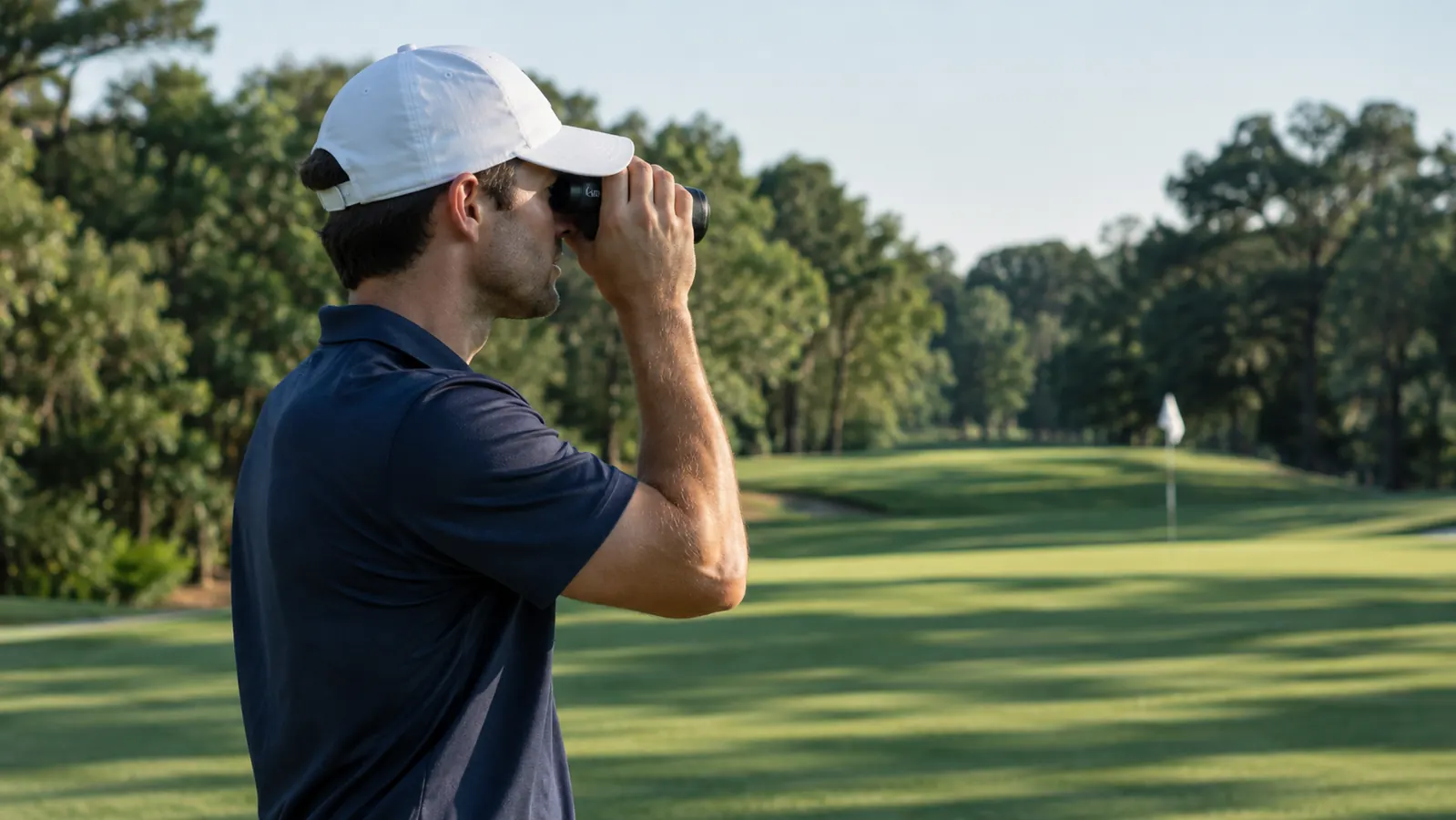
I have been playing golf long enough to remember when guessing the distance was just part of the game. You paced off your ball, looked at the sprinkler head, asked your buddy what he had, and then hit the shot anyway, hoping. For most of my life that was fine. I played to about a 14 handicap, walked nine holes twice a week at my local public course, and saved the real scoring for Saturday. Then my eyes turned 50, and the guessing got a lot less reliable.
Last spring, one of my buddies showed up with a Callaway 300 Pro rangefinder and would not stop talking about it. I rolled my eyes, the way you do. By the third Saturday, I was borrowing it on the par 3s. By the fourth, I ordered my own. This is the story of how that little device changed my Saturday round, and I am not going to tell you it lowered my score, because it did not, at least not the way you might think.
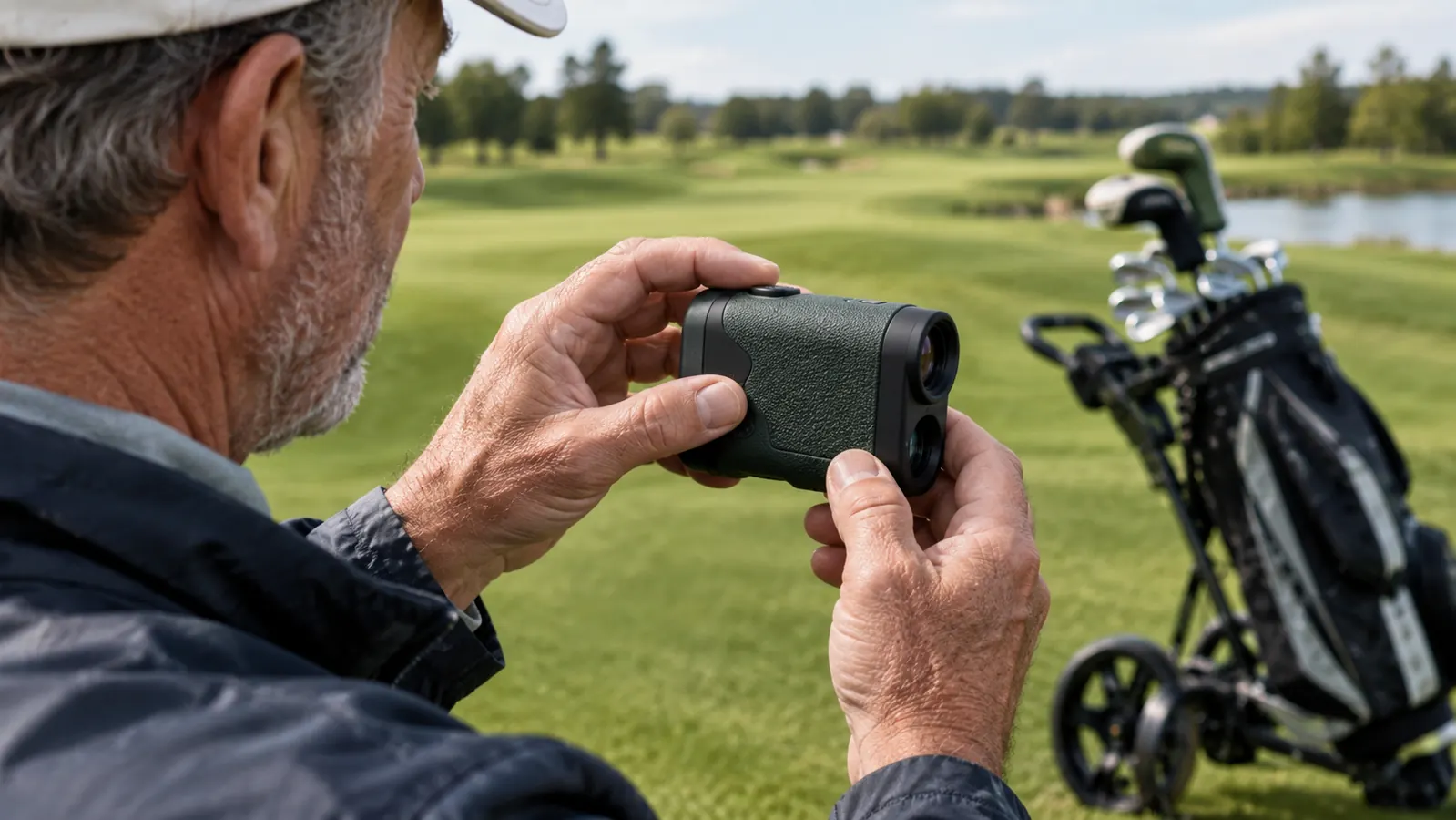
What it did was quieter. It took the guesswork out of the one part of golf I could actually control, the number. I stopped standing over the ball wondering if the flag was 152 or 165. I stopped asking my buddy, who was also guessing. I just looked, got the number, and picked a club. That sounds small. It was not small.
The first thing I noticed was how fast the Callaway 300 Pro locked onto the flag. I had used a friend's older laser before, and it felt like hunting for a needle. This one was different. I pressed the button, and the number was there, almost immediately. It also has an external slope switch, which I will be honest about: I mostly leave it off, because my Saturday group plays by the rules, but I have flipped it on during practice rounds to see how much the elevation was actually changing my numbers.
See today's price on the Callaway 300 Pro
If you are tired of guessing distances on the course, the Callaway 300 Pro is a solid choice. Check the current price on Amazon before your next round.
Amazon Check Today's Price on Amazon →The slope feature taught me something about my home course. There is a par 3 I have played for years, a hole that plays uphill to a shallow green. I always thought it played one club longer. The rangefinder said it played two clubs longer, and the slope reading agreed. I had been leaving every approach short on that hole for a decade, and I did not know it. That is the kind of thing that does not show up in your scorecard as a dramatic change. It just shows up as fewer bogeys.
I also learned that I was not as good at guessing as I thought. I tested myself for a few weeks, guessing the distance before I pressed the button. I was routinely off by 10 to 15 yards on anything past 150. Ten yards is the difference between the front of the green and the back. It is the difference between a birdie look and a two-putt par. It is the difference between a par and a bogey on a bad day. I had been playing with a built-in handicap that had nothing to do with my swing.
I had been playing with a built-in handicap that had nothing to do with my swing.
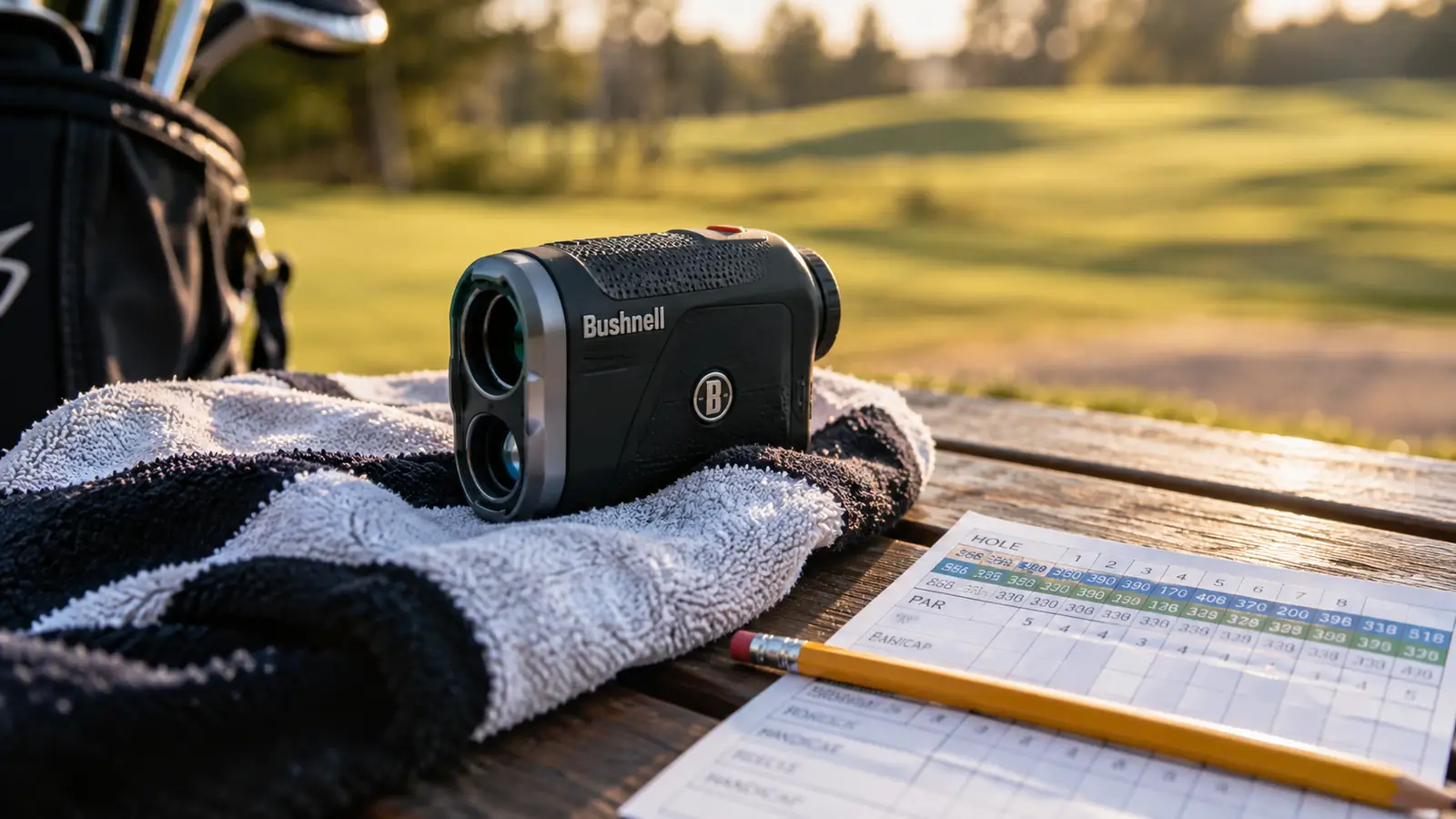
The Callaway 300 Pro is not the cheapest rangefinder on the market, and it is not the most expensive either. It sits in the middle, which is exactly where I wanted it. I did not need a device that measured wind or gave me a caddie in my pocket. I needed a number I could trust, and that is what it gives me. The build feels solid, the case is decent, and the battery has lasted me all season without a change.
My Saturday group has opinions about everything, and the rangefinder has become part of the routine. One of my buddies still paces off his shots and refuses to buy one. Another borrowed mine for a full round and ordered his own the next week. The debate is always the same: is it cheating? I do not think so. The USGA allows distance measuring devices in most formats, and knowing the number does not hit the shot for you. It just means I am not guessing anymore.
If you are a weekend golfer over 40, and you have been telling yourself that a rangefinder is an unnecessary expense, I understand. I told myself the same thing for years. But the Callaway 300 Pro changed my Saturday round in a way I did not expect. It did not make me a better golfer. It made me a more confident one. I stand over the ball with a number I trust, and that is worth more than any gadget promise.
What I'd Tell You If We Were Sitting at My Kitchen Table
If you were sitting at my kitchen table, with Murphy the yellow Lab asleep in the corner, I would tell you this: you do not need the most expensive rangefinder on the shelf. You need one that locks on fast, gives you a number you can trust, and does not make you feel like you are operating a spaceship. The Callaway 300 Pro does all three. I have used it for a full season, and I would buy it again tomorrow.
I would also tell you to be honest about your own habits. If you are the kind of golfer who will actually use the slope switch, get a model with one. If you play in tournaments, keep it off. And if you are the kind of golfer who will leave a rangefinder in the trunk for three months, save your money. This is a tool for people who play enough to notice the difference.
Ready to stop guessing your distances?
The Callaway 300 Pro is the rangefinder I trust every Saturday. Check today's price on Amazon and see if it fits your game.
Amazon Check Today's Price on Amazon →