
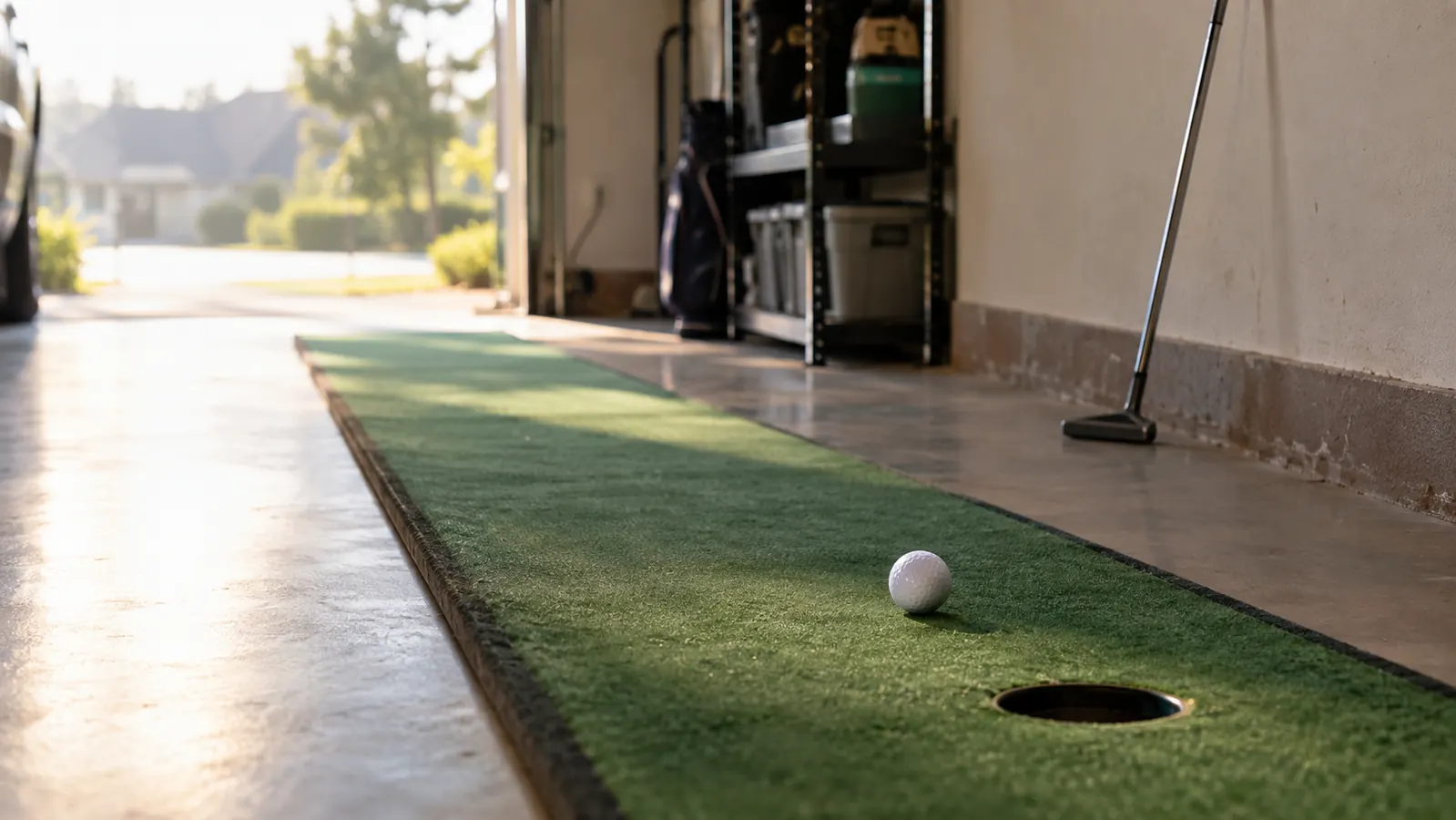
Every winter I tell myself the same thing: this year my putting stroke will survive the off-season. Then January hits, the course goes quiet, and by March my putting looks like something I borrowed from a stranger. Carpet putting never worked for me. The nap grabs the ball, the surface plays too slow, and I end up grooving a stroke that has nothing to do with the one I use on a real green. That's why I ordered the PUTT-A-BOUT Par Three Golf Putting Green (3' x 9') last fall, and why I've spent the last five months rolling putts on it in my garage almost every single day.
I'll give you the short version up front: it has held up far better than I expected, it rolls closer to a real green than anything else I've tried at home, and it has a few quirks you should know about before you hand over your money. This is the honest long-term report after five months of daily use, not a first-week impression.
The Quick Verdict
The best home putting surface I've owned. It rewards a repeating stroke and punishes a sloppy one, which is exactly what I needed to get through a New Jersey winter without wrecking my putting.
Amazon Check Today's Price →The same green I've rolled thousands of putts on this winter
If your putting stroke goes dormant every off-season, the PUTT-A-BOUT gives you a surface that rolls true enough to keep it sharp. Check today's price on Amazon and see if it fits your garage.
Amazon Check Today's Price on Amazon →How I've Used It
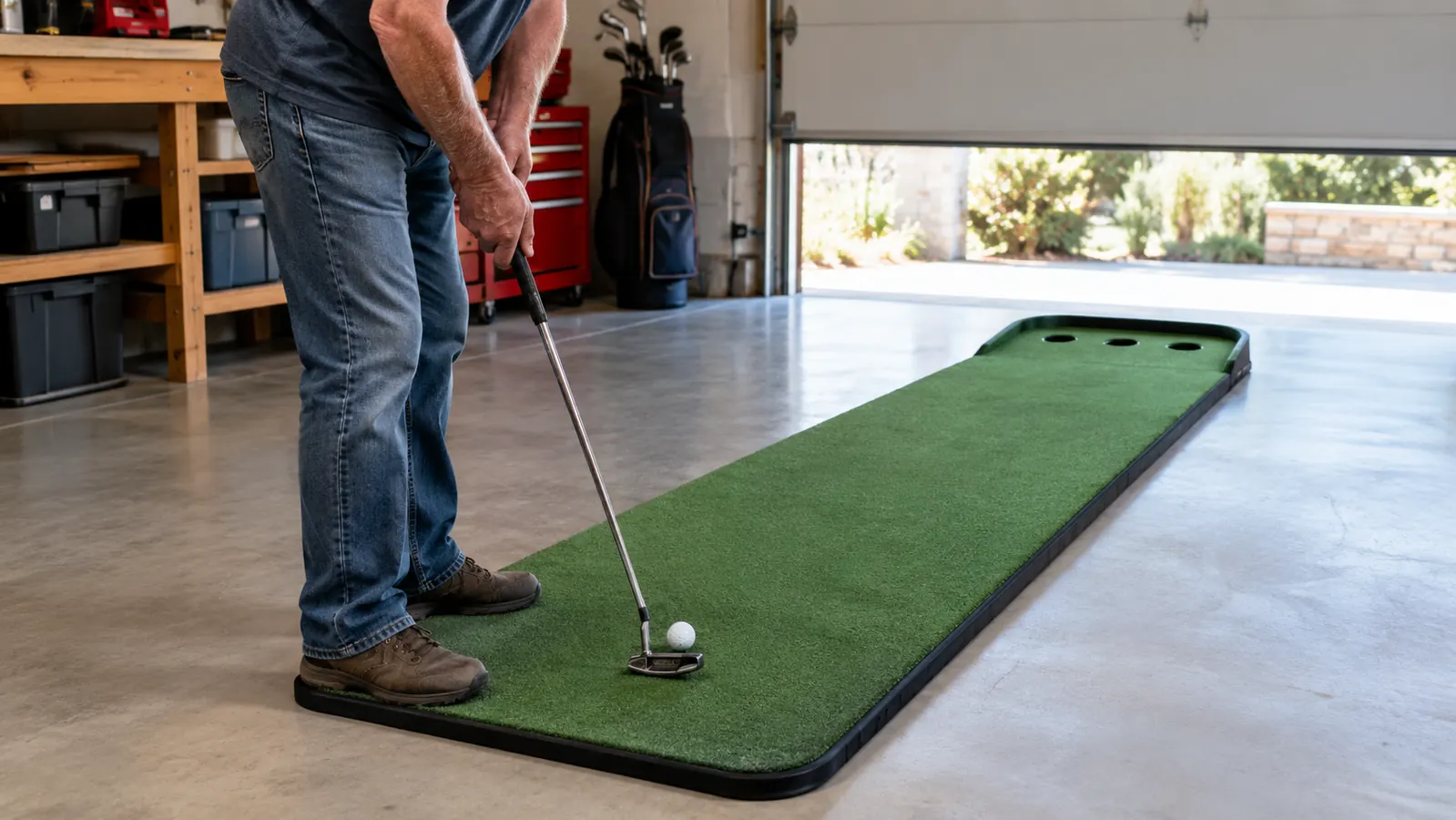
I set mine up in the garage on the concrete floor, between the push cart and the workbench. The green is 3 feet wide and 9 feet long, so it fits in a space that was otherwise dead. I leave it out all winter and roll it up only when I need the room for a project. It takes about ten seconds to roll out and another ten to put away, which matters more than you'd think when the motivation to practice is already low.
My routine is boring on purpose. Fifteen minutes, most days, sometimes twice. I hit ten putts from three feet, ten from six, and ten from nine, alternating among the three holes at the far end. On the days I can't get to the course, that little block of work keeps my hands from forgetting what a square putter face feels like. I'm a 14 handicap and I play to it because I putt average, so I'm not claiming this green turned me into anything I'm not. It just kept me from getting worse.
One thing I learned early: the floor underneath matters. On bare concrete the green plays fast, almost too fast at first. I put a piece of old carpet underlay under mine, the kind with the rubber backing, and that slowed it to a speed closer to my home course in summer. If you buy one, budget ten minutes to experiment with what's under it before you judge the roll.
Murphy, our yellow Lab, learned to step around it by the second week, which tells you how permanent the setup became. He's not allowed on it, and after one correction he never tested the rule again. That's the only role he plays in this review, because the green is mine, not his.
What the Roll Is Actually Like
The whole point of a home putting green is the roll, and this is where the PUTT-A-BOUT earns its keep. The surface is a short-nap synthetic turf over a foam backing, and the ball tracks over it without the skip and grab you get from carpet. My test is simple: I set a ball down, aim at a hole six feet away, and watch whether it wobbles. On the PUTT-A-BOUT it stays on its line. On my old carpet mat it wandered like a grocery cart with a bad wheel.
Speed is the other half. The Par Three plays noticeably faster than any indoor mat I've owned, and once I got the underlay right, it felt like a real green on a normal summer day. That's the detail that matters, because practicing on a surface that's too slow teaches you to hit putts harder than you should, and that habit follows you to the course. I noticed it in the first week: I stopped over-hitting six-footers outdoors because the garage had already taught my hands the right pace.
The feedback is the part I didn't expect to appreciate. When you catch one square, the ball comes off the face with a clean click and a firm roll. When you catch it thin or off the toe, you feel it in your hands before the ball is two feet away. That kind of honest feedback is what makes practice useful, because you learn to correct your own misses instead of waiting for a playing partner to point them out.
The three holes are cut across the far end, and that simple layout does more for my practice than any gadget I've bought. Left, center, and right give me three different start lines from the same spot, so I can't just groove one repetitive stroke and call it practice. The molded fringe around the edge and the sand section at the far end give me a visual target for chips and a reason to keep the ball on the short stuff. It's not a full practice facility, but it's a lot more than a flat strip of carpet.
How It Held Up Over the Winter
This is the part I was most worried about, because I've owned mats that went fuzzy after a month. Five months in, with thousands of putts rolled, the surface still looks and plays like it did on day one. The spot where I stand and the line where I roll putts show no bald patches, no matted nap, no shiny wear line. The foam backing hasn't delaminated, and the green lies flat on the floor without me having to weigh down the corners.
There are two small things to know. First, if you roll it up tight for storage and leave it that way for a while, the ends will curl a little when you unroll it. I fixed that by laying a couple of dumbbells on the corners for a day, and it flattened right out. Second, the raised edge where the fringe meets the putting surface will make a hard-hit ball hop slightly as it crosses. You learn to account for it, but it surprised me the first time, and it's worth knowing before you blame the green for a miss.
The green also stays where I put it. The foam backing grips the floor well enough that it doesn't slide when I walk on it or when I make a stroke, even on smooth concrete. The holes themselves have held their shape through the winter, with no cracking at the rims and no fraying around the edges. For something that costs what this costs, that's the durability I wanted to see before I recommended it to anyone.
What It Won't Do for You
Let me be honest about the limits, because every review on the internet reads like a love letter and that's not how I do things. This green is dead flat. There's no break, no slope, no undulation. You can shim one edge with a book to create a tiny tilt, and I've done that, but it's a rough imitation of a real sloping putt, not the real thing. If you need to practice breaking putts, you need a bigger, pricier setup or a real practice green.
It's also 9 feet long, so the longest putt you'll hit is 9 feet, and realistically more like 8 once you account for the fringe. That covers most of the putts you'll face in a round, which is why I still recommend it, but it won't help your lag putting. And it's a piece of turf on your floor. My wife Carol doesn't golf, and she was clear that the living room was not an option, so the garage it is. If you don't have a spare stretch of floor somewhere, this product has no home.
There's one more limit that doesn't show up in the product photos: this green will not make you love practicing. It removes the excuses, because the setup is right there and the roll is honest, but you still have to walk over and pick up the putter. I had weeks where I skipped it, and my putting showed it the next time I played. The green is a tool, not a teacher.
How I Built a Routine Around It
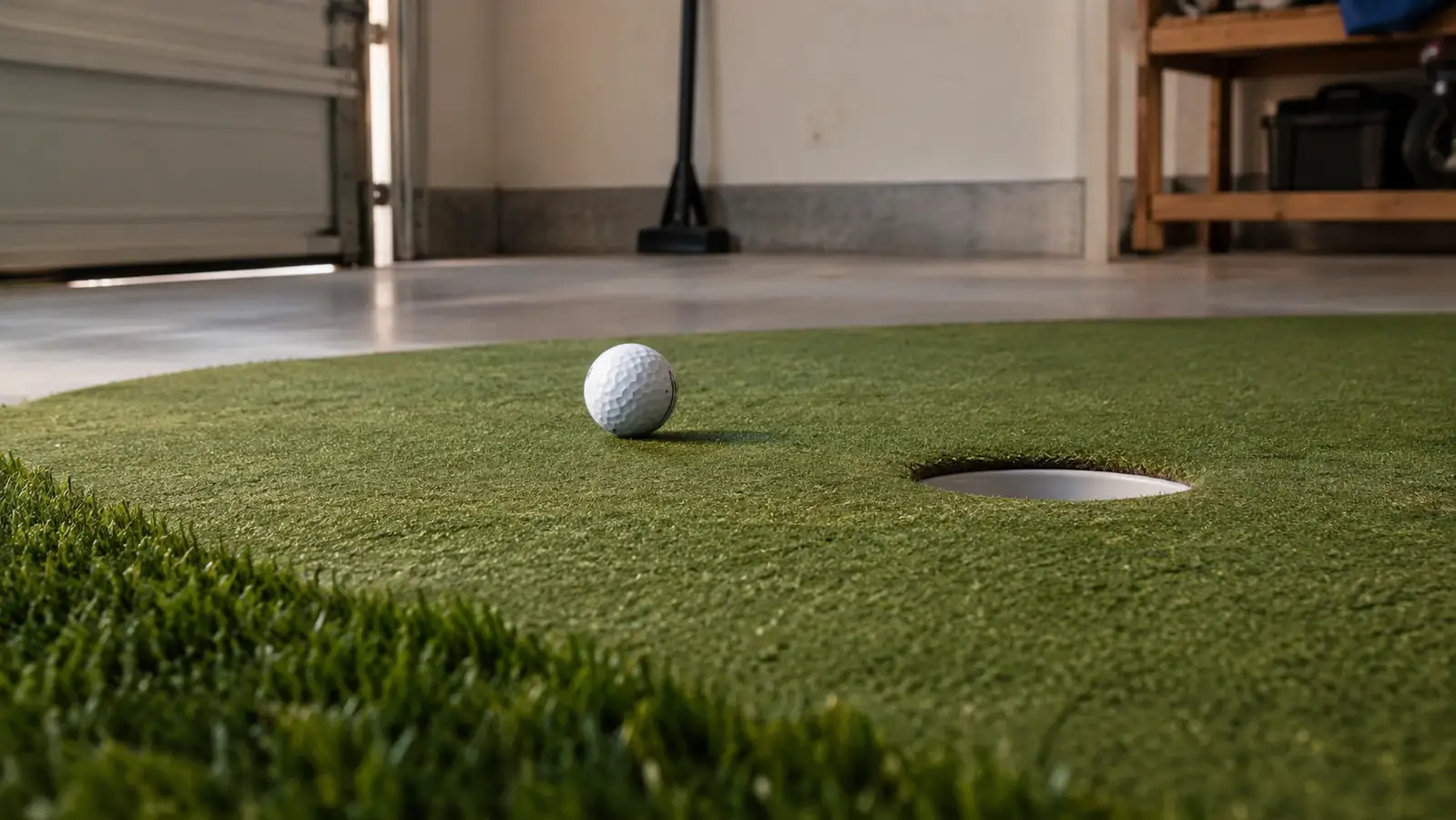
After the first month, I stopped thinking of the green as a purchase and started thinking of it as a piece of the garage, like the workbench or the push cart. That's when I built the routine that actually stuck. I keep a small bucket of balls on the shelf next to it, and my putter lives leaning against the wall beside the green. When the gear is already out and in sight, the friction of starting practice drops to almost nothing.
The routine itself is simple, and I stole it from a playing partner who's a better putter than me. Ten putts from three feet to build confidence, ten from six feet to work on pace, ten from nine feet to work on start line. Then I do it again with my eyes on the hole for the last five from each distance, which trains my feel for distance without staring at the ball. It takes about twelve minutes, and on the days I do it, I walk to the first tee feeling like my stroke is mine.
Alternatives I Considered
I looked at bigger greens before I bought this one, and I'll be straight with you: if you have the room and the budget, a larger surface with more length and a little contour is the better buy. The reason I landed on the 3' x 9' Par Three is that it's the biggest green that fits my garage layout without taking over the space, and it costs a fraction of what the big setups run. The tradeoff is real, and I made it with my eyes open.
The other name I see everywhere is SKLZ, and I spent a while weighing that one before I ordered this. They're different tools. The SKLZ mat has markings and alignment aids built into the surface, which is great if you want visual feedback on your path. The PUTT-A-BOUT is a plainer surface that asks you to feel the stroke and read the roll for yourself. I chose the PUTT-A-BOUT because I wanted something closer to a real green, but if you're torn between the two, the full side-by-side comparison is worth a read before you decide.
What I Liked
- Rolls closer to a real green than any carpet mat I've tried
- Three holes at different positions keep target practice honest
- Foam backing holds it flat on concrete or garage floors
- Rolls up for storage in about ten seconds
- Surface shows almost no wear after five months of daily use
- One of the least expensive ways to practice a real putting stroke at home
Where It Falls Short
- Dead flat, so no break or slope practice
- 9 feet is the longest putt you'll hit, so no lag work
- Raised fringe edge makes a hard ball hop slightly
- The floor underneath changes the speed, so expect some experimenting
- It's a strip of turf on your floor, and it won't win any decorating awards
I've rolled somewhere north of 8,000 putts on this green since November, and it still rolls as true as the day I unrolled it. My course's practice green can't say that in March.
Who This Is For
Buy this green if you're the golfer I was last November: a mid-handicap amateur who loses his putting stroke every winter and wants a way to keep it alive without driving anywhere. It's for people with a spare stretch of floor in a garage, a basement, or an office corner. It's for league golfers who want fifteen honest minutes of work on start line and pace after dinner. It's for anyone who has tried carpet putting, found it useless, and wants a surface that behaves like the real thing. There are plenty of good reasons to move your putting practice indoors, and this green covers most of them. If that sounds like you, this is the cheapest way I know to get there.
Who Should Skip It
Skip it if you have room and budget for a bigger green, because a longer surface with some contour will serve you better. Skip it if you specifically need to practice breaking putts, because flat is flat and no book under one corner is a real substitute. Skip it if you don't have a place to leave it out, because you won't use it if you have to set it up and tear it down every time. And skip it if you're expecting a product to fix your putting for you, because it won't. It's a practice tool. You still have to do the work.
Five months in, I'd buy it again
The PUTT-A-BOUT won't fix your stroke by itself, but it gives you a true-rolling surface to practice on every day, which is the next best thing. After five months of daily use, I'd buy it again. Check today's price on Amazon and see if it fits your garage.
Amazon Check Today's Price on Amazon →